
Can Your Home Handle An EV Charger?

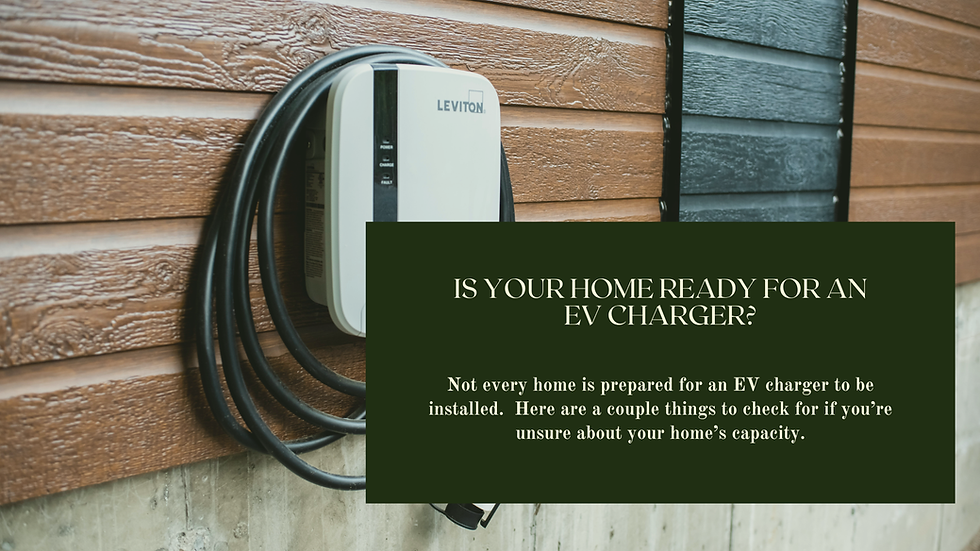
When you buy an electric vehicle, you are quickly faced with a burdensome reality: it needs to be charged. In Dallas, there are a multitude of public charging stations, but it can be inconvenient to plan out when, where, and how long you'll be able to charge.
This is why most electric vehicles will come with a basic Level 1 charger, and if yours didn't, they are inexpensive. However, these Level 1 chargers aren't efficient. Your other option would be to install a Level 2 charger, but this is more of an undertaking and if you own an older home, it may not be able to handle it. However, this can be addressed.
Why Choose Home Charging?
Home charging is far more convenient and economical than relying on public charging. You won't have to worry about waiting for an open spot or running into a broken charger. It also typically costs 50-60% less than public charging, which is always a win. And if you plan to sell your home at any point in time, having a Level 2 charger installed increases your property value, making it easier to sell for more money.
But What Is a Level 1 Charger Vs. a Level 2 Charger?
A Level 1 charger uses a 120 volt outlet-just like what you'd use to plug in a lamp. Though it's small and convenient, it's not efficient. It's incredibly slow-taking up to 24 hours to fully charge your vehicle. Though you would not have to worry about getting a bigger charging station installed, it would not be a wise choice for someone with a daily commute.
A Level 2 charger takes a 240 volt outlet-like your oven. This would need a dedicated circuit and a professional to install. If you have an older home, you might even need to upgrade your electrical panel. This one charges at a much quicker rate. It could fully charge your vehicle overnight. This is a much more efficient option.
So How Do You Know Your Home is Ready For an EV Charger?
The biggest indicator that your home can handle an EV charger is that your electrical panel is large enough.
Your electrical panel is the heart of your home's electrical system, and it needs adequate capacity to handle EV charging. If your home is built after 1980, chances are it provides enough power. But if it's older than that, you may have a 150 or even a 100 amp panel. This may not be enough depending on the power capacity of the home itself. If you have appliances that run on gas, such as your water heater and furnace, then you may have enough capacity for an EV charger. But if your home is entirely electric, 150 or 100 amps will most likely be insufficient.
You can easily check this yourself. If you go to your electrical panel, check the large switch at the top. This number represents your home's total electrical capacity. However, if you're unsure or you see anything less than 100 amps, you can hire a professional to evaluate your panel's capacity.
The next thing you'll need to consider is where you want to put the charging station.
Level 2 chargers are more than something you simply plug into the wall. It's a major appliance, so you need to think about location. Most charging cables run about 18-25 feet long, which gives you plenty of flexibility in choosing a place. However, don't choose a spot that could create tripping hazards.
Finally, you'll need to consider if you want the charger in your garage or if you'd prefer it outside. If its indoors, installation is straightforward. If not, you'll need a weatherproof charger. Your electrician will make sure it has the right protection from the elements.
In Conclusion.....
If you already know that you want to install a Level 2 charger, then you'll need to find a licensed electrician to help you. Electricians of Dallas will provide you with a free estimate, so give us a call at 972-418-0691.


Comments